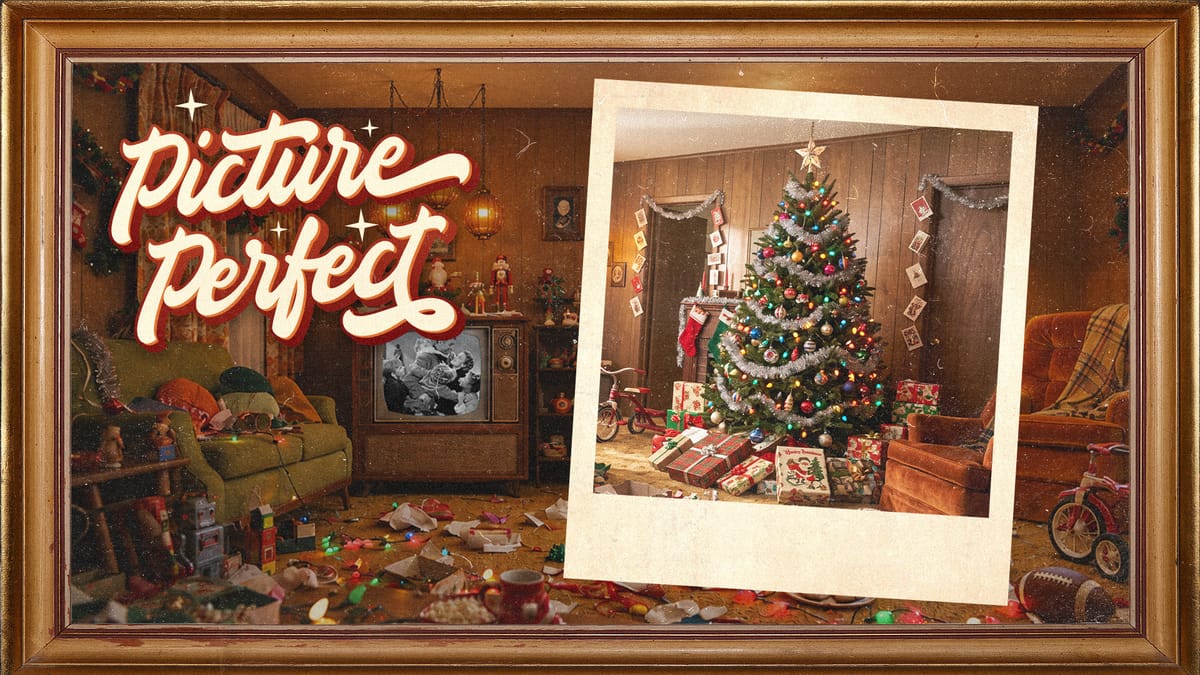
Picture Perfect series art: a perfect Christmas morning Polaroid held in front of a messy, real living room

Christmas Eve RSVP Coming Soon...

01 / Christmas Eve

There is room for your real life.

Join us Thursday, December 24. Four Christmas Eve services, each about one hour long. Bring the whole crew, including the messy parts.

02 / Christmas details

Everything you need before you come.

Community Kids

Nursery and Preschool

Open at the 12, 2 and 4 PM services, space permitting. Kids of every age are always welcome in the worship center with you.

Nursery: ages 0-2
Preschool: ages 2-5
Check-in opens 30 minutes before service.
No kids rooms at 6 PM.

Watch online

Can't make it in person?

Watch from the couch, in your pajamas, next to the tree that's leaning a little. We'll save you a seat next time.

Livestream timing is being confirmed.

Watch online

Picture Perfect Advent devotional

The picture we pose and the moment we actually live.

Nine short devotionals to go with the Sunday series: two a week through Advent, plus one for Christmas. Open a week and read at your own pace.

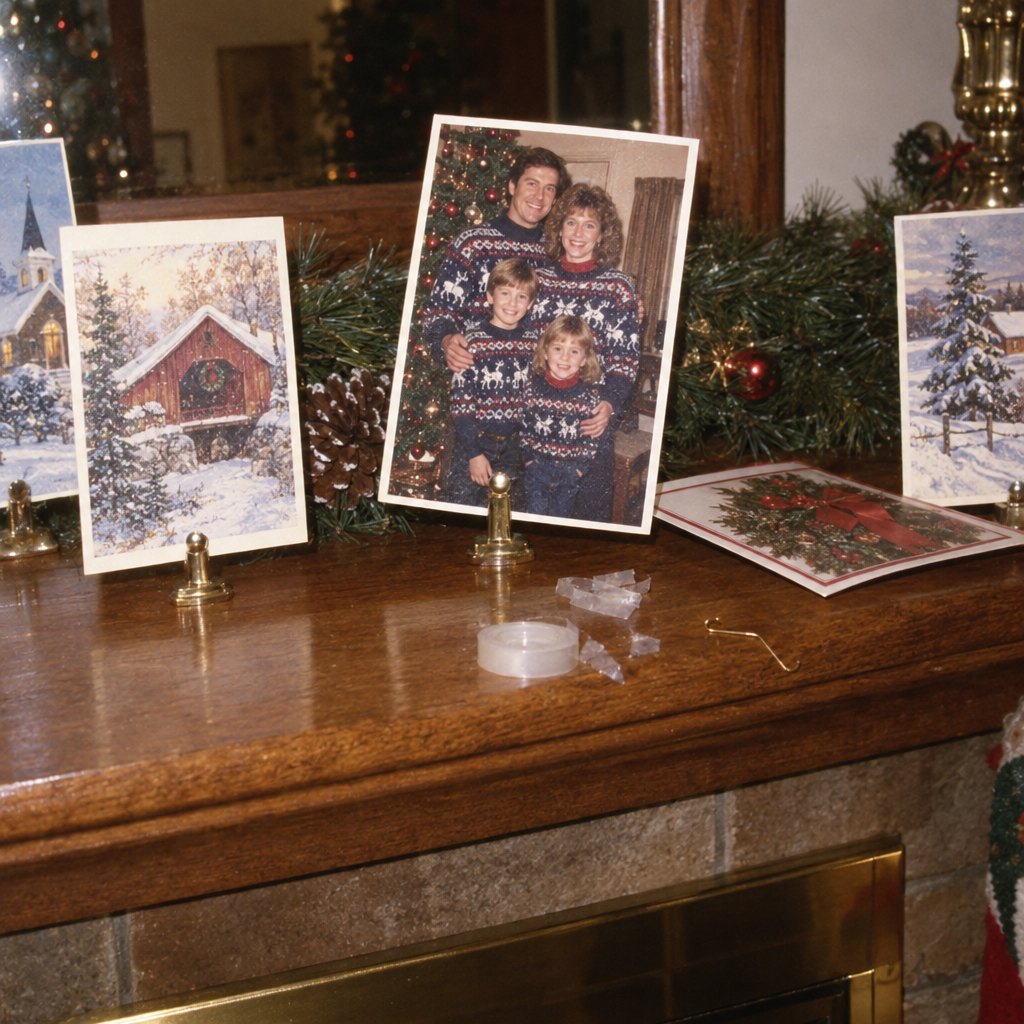
the Christmas card

Sunday, November 29

The Hope of Perfection

Devotional 1: The card on the mantelRead

Read: Jeremiah 33:1-3, 14-16; Matthew 1:21; 2 Corinthians 5:21

Every December the cards show up. Matching sweaters. Perfect smiles. A dog who, somehow, looked at the camera. We put them on the mantel or the fridge, and if we're honest, we feel a little tug: I want that. I want a life that looks like that.

That tug isn't silly. It's older than Christmas. Genesis says God made a world that was "very good": whole families, whole hearts, nothing cracked. We've been homesick for it ever since. Advent starts by naming that ache instead of scolding it. When we look at the perfect card, part of what we feel is a memory of Eden and a longing for the new creation.

Look at where Jeremiah's promise comes from. In chapter 33 he's locked in the palace guardhouse while Babylon's army surrounds Jerusalem. The city is about to fall. About as far from a Christmas card as you can get. And right there God says, Call to me and I will answer you, and will tell you great and hidden things that you have not known. Then He promises a righteous Branch from David's line, a king who will do what is just and right, and a city that will be called "The Lord is our righteousness."

The perfection God promises isn't something we produce. He gives it. Righteousness is a name He puts on His people, not a standard they have to hit before the photo. That's why the child born in Bethlehem was named Jesus, "for he will save his people from their sins" (Matthew 1:21). In Him, God makes the exchange for us, so that "in him we might become the righteousness of God" (2 Corinthians 5:21). Biblical hope isn't wishing things will look better. It's trusting a promise from Someone who keeps His word. Advent is the season of learning to wait on that.

Reflect

What did you hope your life would look like this year? How is it different than the real picture?

Try this

Take one Christmas card from your mantel or fridge. Look past the smiling faces and pray for what the picture doesn't show: the worries, struggles, losses, and hopes this family may be carrying right now. Pray for them by name, and ask God to be their righteousness and their hope. If you can, send a note to let them know you prayed.

Pray

God, You know the picture I wish I had. Take the desires and ambitions I have and align it with you and your promises. Teach me to hope in what You've said, not in how things look. Amen.

Devotional 2: Hope with its eyes openRead

Read: Isaiah 9:1-7

The card doesn't show the argument just before everybody said "Cheeeeeese!" It doesn't show the empty chair, the strained relationship, the diagnosis, the job that fell through. A Christmas card is a highlight reel, and most of us know it.

When Isaiah writes his book, he's writing to people under threat from the Assyrian empire, and he's specific about the damage: the northern regions of Zebulun and Naphtali, the first to be crushed, were "brought into contempt." Then he talks about people walking in darkness, real darkness, and says a great light has dawned. Biblical hope keeps its eyes open. It looks at the broken parts and says, this is not the end of the story.

See where the light lands. The first places darkened are the first places lit. Centuries later Matthew points back to this passage when Jesus begins His ministry in Galilee (Matthew 4:12-16). The Light didn't skip the hardest-hit neighborhood; He chose to make it His home.

Then Isaiah gives the coming Messiah (Jesus) four names: Wonderful Counselor, Mighty God, Everlasting Father, Prince of Peace.

The passage ends with an important line: the zeal of the Lord of hosts will do this. The hope rests on God's ability to make it happen, not ours. We aren't asked to make the picture perfect. We're asked to look toward Him.

Paul says it this way in Romans 8:24-25: hope that is seen isn't hope. We hope for what we don't yet see, and we wait for it with patience.

Reflect

What part of your life do you tend to crop out of the frame? Which of the four names (Counselor, Mighty God, Father, Prince of Peace) do you need most this week?

Try this

Name one dark place in your life or family. Each day this week, pray Isaiah 9:2 over it by name: Lord, bring light here.

Pray

Jesus, light of the world, I don't need to hide the dark places from You. Meet me there. Be my Counselor, my strength, my Father, and my peace, and let Your light be the hope I stand on. Amen.

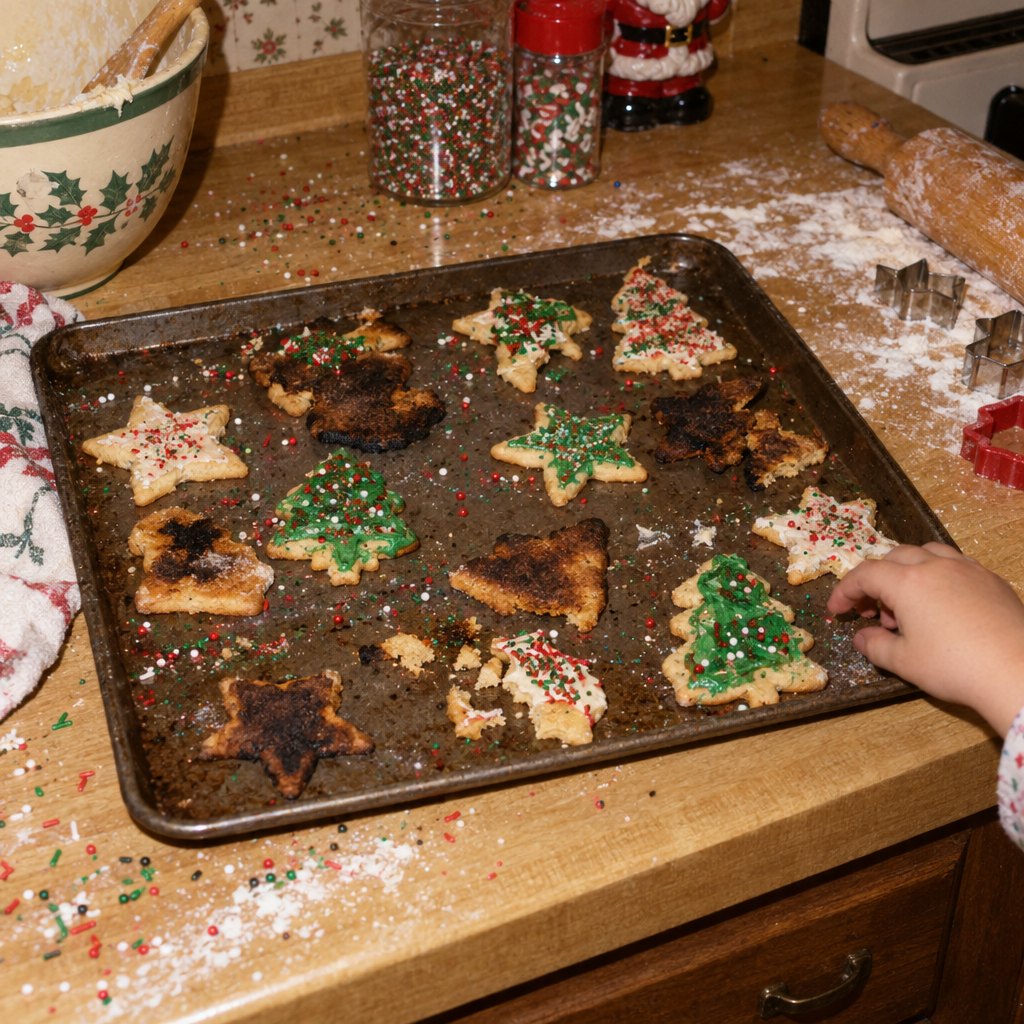
Christmas cookies

Sunday, December 6

Peace in Imperfection

Devotional 1: Burnt edgesRead

Read: Luke 10:38-42; John 14:25-27; Romans 5:1; Ephesians 2:14

Somewhere online there's a tray of cookies with identical stars, flawless icing, and not one crumb out of place. And somewhere in your kitchen there's a tray with a gingerbread man missing a leg, a few batches a little too brown, and frosting that went on thicker than planned.

Guess which tray gets eaten first.

Most of us are tempted to measure the season by the first tray: the right traditions, the right décor, the right mood. And when reality bakes up a little darker, the pressure rises. Peace goes out the window about the time the oven timer goes off.

Luke gives us a kitchen scene. Martha is hosting Jesus and doing what a good host does. She's also "distracted with much serving." Jesus doesn't scold her for caring about the meal. He names what the preparation is doing to her: you are anxious and troubled about many things. Notice He says her name twice, gently. The problem isn't the cookies. It's what the cookies have become: a verdict on whether she's enough.

Now jump to the Upper Room. The night before His arrest, Jesus tells friends who are about to scatter, "Peace I leave with you; my peace I give to you. Not as the world gives do I give to you." The idea behind this is the Hebrew word shalom, which means far more than the absence of conflict. It means wholeness, and at its center is peace with God: through Jesus we have been justified by faith and have that kind of peace (Romans 5:1), because He Himself is our peace (Ephesians 2:14). The world's version of peace depends on conditions: everything in order, everyone behaving, nothing burnt. Jesus gives a peace that doesn't wait for the kitchen to cooperate, because it rests on a Person who is with us in the middle of the mess.

Reflect

Where are you holding this season to a standard that's stealing your peace? What would "good enough" look like there?

Try this

Choose one holiday task this week and deliberately lower the bar. Buy the cookies, skip the extra decoration, or let the kids frost them crooked. When the old pressure rises, say it out loud: "Peace I leave with you."

Pray

Jesus, I confess how often I trade Your peace for a spotless picture. Give me the peace that doesn't depend on things going right, and help me sit at Your feet even when there's work to do. Amen.

Devotional 2: Broken breadRead

Read: Micah 5:2; Ruth 1:19-22; John 6:35; Luke 22:19; Isaiah 53:5

Bethlehem means "house of bread." Of all the places God could have picked, He picked a small town with a name that points to something ordinary and daily, something you break and share.

That little town's name has a big history. In the book of Ruth, a famine hits Bethlehem and the house of bread runs empty. Naomi leaves, loses her husband and sons, and comes back years later bitter and empty-handed: "call me Mara," she says, meaning bitter. The chapter ends with: they arrived "at the beginning of barley harvest." Bread was coming back to Bethlehem, and through Ruth's line it would come to a king, and eventually to the King.

Centuries later, Micah says Israel's ruler will come from this town, "too little to be among the clans of Judah." God keeps picking the small, the overlooked, the empty places. The One born there would say, "I am the bread of life," and the night before the cross He took bread, gave thanks, broke it, and gave it away. The breaking wasn't a flaw in the plan, it was the plan.

His breaking was unique. He was "pierced for our transgressions," and upon Him was "the chastisement that brought us peace" (Isaiah 53:5). Nothing in our own brokenness adds to what He finished. But it does change how we see our own cracked edges. We hide what's broken. God has a habit of using it. Paul learned that Christ's power is "made perfect in weakness" (2 Corinthians 12:9). The peace Jesus brings isn't the peace of a flawless life. It's peace with God, bought at the cross, and the peace of being fully known (the brokenness included), fully loved, and fed anyway.

Reflect

What feels broken in your life right now that you've been trying to hide? What would change if you handed it to Jesus instead of managing it?

Try this

Share something baked or bought with someone who might be alone this week. When you break the first cookie, remember who was broken for you, and tell the person one honest sentence about why you thought of them.

Pray

Bread of life, thank You for coming close to us in our brokenness. Feed me with Your peace, and help me share it with someone who needs a seat at the table. Amen.

the Christmas tree

Sunday, December 13

Joy in Chaos

Devotional 1: Tangled lightsRead

Read: Luke 2:8-14; John 16:20-22

Every family has the tree story. The lights that worked fine in January and now flicker. The strand that took an hour to untangle. The tree that leans a little too much to the left, the ornament the cat found, the argument over whose turn it was to put the start on the top of the tree.

We picture joy as the moment the tree is finished and glowing and everyone is quiet. But most of the real joy happens in the middle: laughing at the leaning tree, the bickering that ends in a shared joke.

The first announcement of joy in the Christmas story went to shepherds: ordinary working people on the night shift, outdoors, among animals. No glowing anything. Into that mess an angel said, "I bring you good news of great joy that will be for all the people." In the Roman world, "good news" language was often used for imperial announcements, such as a new emperor or a military victory, and Luke's wording echoes that. The real King's announcement goes to the night shift, not the palace. Joy didn't wait for the shepherds to get their lives in order. It showed up while they were still on the job, and their first response was terror. The angel's first words were, "Fear not." And the reason for the joy wasn't their circumstances: "For unto you is born this day in the city of David a Savior, who is Christ the Lord." The joy is in the Savior.

Jesus gives us another picture of joy in John 16, where He's speaking about the grief of the cross and the joy of the resurrection. He compares the disciples' coming grief to a woman in labor: pain, mess, and noise, and then "joy that a human being has been born into the world." Joy and chaos aren't opposites in Scripture. Joy often comes through the chaos.

So joy, in the Bible, isn't the absence of chaos. It's the presence of Jesus within it.

Reflect

Where is there a little chaos in your life right now? Is Jesus welcome in the middle of it, or are you waiting to invite him into it until it's tidy?

Try this

The next time something goes sideways this week (tangled lights, a spilled drink, a missed plan), pause for ten seconds. Name one thing God is still giving you in that moment.

Pray

God of good news, I don't want to wait for a perfect moment to find joy. Open my eyes to what You're doing in the middle of my ordinary, tangled days. Amen.

Devotional 2: A shoot from the stumpRead

Read: Isaiah 10:33-11:5; Nehemiah 8:9-12

We love a full, bright tree. Isaiah's imagery goes somewhere else. At the end of chapter 10, God cuts down the proud Assyrian "forest" with an axe. Then chapter 11 turns to David's family tree, the line of kings that came from Jesse, and finds it reduced to a stump. The dynasty looked finished. Then this: "There shall come forth a shoot from the stump of Jesse." New life from what looked dead.

This is how God works again and again. He doesn't start with the best-looking thing. He brings life out of the last place we'd look. The king of the world didn't arrive as a towering tree. He arrived as a shoot, small and easily missed.

If your year feels more like a stump than a tree (a hard season, a loss, a plan that didn't grow), take heart. A stump isn't the end. It's where the shoot comes from.

Now look at Nehemiah 8. The people hear God's Law read aloud and they weep, because it shows them how far they've drifted. Nehemiah and Ezra tell them to stop grieving: "The joy of the Lord is your strength." Their circumstances hadn't changed yet. They were still a small, struggling remnant living under foreign rule, but the source of their joy didn't depend on that. And look at what they're told to do: eat, drink, send portions to those who have nothing. Joy here is a shared meal and an open hand. Paul later quotes Isaiah 11 in Romans 15:12-13, then prays that the "God of hope" would fill us with all joy and peace. Hope, peace, and joy are one connected gift.

Christmas joy isn't forced cheer. It's the deep gladness that Jesus, the shoot from the stump, has come.

Reflect

What looks like a stump in your life? Where might God be growing something you can't see yet?

Try this

Next time you walk past your tree (or any tree) remind yourself that shoots come from stumps. Thank God for one "shoot" you can see in your own life, however small.

Pray

Lord, thank You for bringing life out of what looks finished. Plant a joy in me that's stronger than my circumstances, and make me glad to share it. Amen.

gifts and parties

Sunday, December 20

Love Changes the Picture

Devotional 1: Love in the rushRead

Read: Luke 2:1-7; 1 Corinthians 13:1-3; 1 John 4:9-10

The last week before Christmas has its own kind of weather. The to-do list grows faster than it shrinks. There's a gift still unbought, a dish still unmade, a flight that might get delayed, a school program, a work deadline, a houseful of people arriving Thursday. Before the week even starts, most of us are running on fumes and are a little short with the people we're doing all of this for.

The first Christmas week wasn't any calmer. A government order sent Joseph and a very pregnant Mary on a journey of roughly ninety miles. They arrived with no place of their own, and Luke tells us "there was no place for them in the inn." A birth came in the middle of it. Nothing about the original picture was tidy, and love was right there in the rush.

In 1 Corinthians 13, Paul is writing to a church about spiritual gifts. Picture this: speaking with eloquence, knowing everything, giving away everything you own. Impressive, right? But without love, Paul says, it is nothing more than a noisy gong. It means doing things with love, not the size of the pile, or everything going exactly according to plan, or the polish of the wrapping is what matters. A small thing given with great love does more than a big thing given without love.

God didn't wait for the world to be prim and proper. He arrived in the middle of the crowd, the noise, and the unfinished business. "In this is love, not that we have loved God but that he loved us and sent his Son to be the propitiation for our sins" (1 John 4:10). Let's be people who give with the same love that Jesus first gave to us, realizing that everything doesn't have to be perfect for us to show our love to those around us.

Reflect

What's on your list this week that's really about love, and what's just about looking like you've got it together? What could you let go of without anyone, including you, being worse off?

Try this

Choose one person and give them ten minutes of your undivided attention this week: phone away, no multitasking, no agenda. Make that the first gift you give, before anything else gets wrapped.

Pray

Lord Jesus, You came into a crowded, hurried, unfinished world and brought love with You. Slow me down enough to notice the people in front of me. Show me what matters, and give me grace to let the rest go. Amen.

Devotional 2: Love beside the empty chairRead

Read: Matthew 1:23; Matthew 2:16-18; John 11:32-36; Psalm 34:18; Hebrews 2:14-15; Revelation 21:4

Not everyone is racing this week. Some people are moving slowly because there is a heaviness this week. It might be the first Christmas without someone. It might be a hard diagnosis, a marriage that's ending, a job that's gone, a child who won't be coming home, a table with one chair too many or too few. The gatherings are on the calendar, the music is everywhere, and the cheerful picture feels nothing like your reality.

If that's you, hear this first: Christmas doesn't require you to feel merry. The Christmas story was never only a happy story. Matthew tells us that not long after Jesus was born, Bethlehem's families were shattered by a king's cruelty, and he borrows a prophet's words about weeping that won't be comforted.

One of Jesus' names is Immanuel, which means "God with us." The promise isn't "God fixes everything by December 25." It's God with us, in the empty room, in the hurt. Love, in the Christmas story, doesn't rearrange the picture so the pain disappears - it steps into the painful picture. The hope that we have is that the same Jesus who stepped into the painful picture is the same Jesus who came to deal with the root of the pain. Through His death, burial, and resurrection, Jesus destroyed the one who has the power of sin and death and freed those who were held in lifelong slavery by it. That same Jesus promises us that one day He will wipe away every tear and there will be no more pain.

We see this in the shortest verse in the Bible. When Jesus reached the tomb of His friend Lazarus, He knew He was about to raise him, but He wept anyway. Love doesn't hurry past sorrow to get to the 'good part.' Rather, love sits down on the couch next to the sorrow. The book of Psalms says the Lord is near to the brokenhearted. That's not just a sentiment, it's a promise for the people who feel furthest from the party.

If you're the one hurting, you have permission to keep Christmas smaller this year: leave early, say no, light a candle and say a name out loud. If you're not the one hurting, love asks something of you too. Look around the party. Someone is quiet. Someone is smiling a little too hard. Love doesn't fix them or hand out quick comforts. It sits with them in the sorrow.

Reflect

Where do you feel the ache of someone or something missing this Christmas? And who in your life might be hurting more than they're letting on?

Try this

If you're grieving, light a candle this week for the person or the hope you miss, and speak their name to God and acknowledge how you're feeling. If you're not grieving, send one message or make one call to someone who's hurting. Be specific: "I'm thinking of [name] this week. Can I bring dinner this week, or just sit with you?" Seasons like this can magnify the grief we carry. If yours feels stuck, make it a priority in the new year to talk with a trusted friend, a pastor, or a counselor. You're not meant to deal with it alone.

Pray

Immanuel, God with us, You know the empty chairs and the quiet rooms. Be near to everyone who hurts this week. Give those who grieve permission to grieve, and give the rest of us the courage to sit beside them. Let Your love be the thing that stays. Amen.

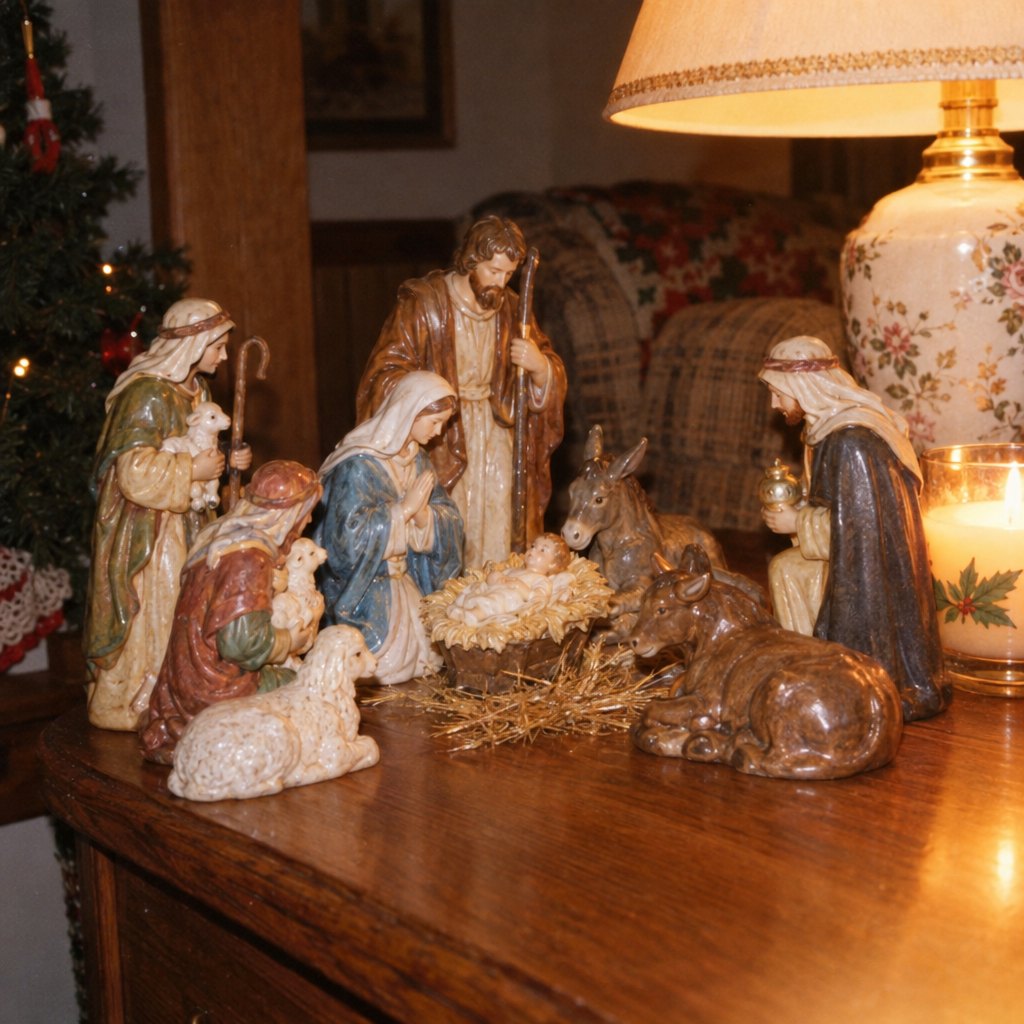
the nativity

Christmas Eve, Christmas Day, or any day that week

The Perfect Picture

Already here, still comingRead

Read: Luke 2:1-20; John 1:14; Colossians 1:15; Titus 2:11-14; Hebrews 9:28; Revelation 21:1-5; 22:20

For four weeks we've held up the pictures we make: the card, the cookies, the tree, the gifts and the guest list. Today we put them down and look at the one picture that actually is perfect. It comes in two frames.

Advent comes from the Latin for "coming," and the church has always talked about two Advents together. The first is the one we celebrate: a child born in Bethlehem. The second is the one we still wait for: Jesus returning in glory, as the angels promised at His ascension, to make all things new. Many of the texts we've read this month talk about both of these Advents at once. Isaiah looked at a child born and a government resting on His shoulders, and saw a peace without end. Isaiah also pictured a shoot from Jesse's stump and wolves lying down with lambs. The prophets saw both moments like two mountain peaks that look like one ridge from far away. We're standing in the valley between, where we can see the distance.

The first Advent picture isn't what anyone would have staged. Luke names the powerful, Caesar Augustus and Quirinius, then zooms in on a young couple far from home, animals nearby, a newborn laid in a trough meant for food and water. The angel tells the shepherds their sign: a baby wrapped in cloths in a manger. The sign of God's glory doesn't look like we'd imagine it to be. Yet this is the image the Bible reaches for. Paul calls Jesus "the image of the invisible God." John says the Word became flesh and "dwelt among us," literally pitched His tent in our neighborhood. The perfect picture isn't a scene we arrange. It's a face: God's face, seen at last in a child. The grace of God has appeared.

Notice what the grace of God appeared to do. The book of Titus says Jesus "gave himself for us to redeem us from all lawlessness" (Titus 2:14). The manger points to the cross. He was named Jesus because "he will save his people from their sins" (Matthew 1:21), and the angel told the shepherds the child is "a Savior, who is Christ the Lord" (Luke 2:11). The perfect picture is the One who takes our place.

The second Advent is the picture God has promised. The same Titus passage keeps going. We're to live now, it says, "waiting for our blessed hope, the appearing of the glory of our great God and Savior Jesus Christ." Hebrews 9:28 says that Christ, having been offered once to bear the sins of many, will appear a second time to save those who are eagerly waiting for him. And Revelation 21 describes where history is headed: a new heaven and new earth, and a voice declaring that God's dwelling is with humanity. Hear the echo: the same dwelling language John used at the manger. Then comes the promise that lands hardest in a season full of empty chairs: God will wipe away every tear, and death, mourning, crying, and pain will be no more. "Behold, I am making all things new."

That's why Christmas can hold both our joy and our sorrow. It's not that the story is finished and we're the ones who didn't get the memo. The first coming is God's down payment, and a promise kept. The manger shows us the heart of God. The second Advent will show us the whole picture. Until then we live in the middle, with tangled lights and cracked cookies and tender hearts, holding a gift in one hand and a promise in the other.

Luke says Mary "treasured up all these things, pondering them in her heart." She didn't see the whole picture either. She trusted the Lord. So can we.

Reflect

Where do you most need the reminder that God has already come near in the middle of what you're facing? And where do you most need the reminder of the promise that He'll make right something that's still broken?

Try this

Take a piece of paper and draw a line down the middle. On the left, write Already: three things Christ has done or given that you can be sure of. On the right, write Not yet: three things you're still waiting for Him to make right. Read both columns aloud, ideally with your family or a friend, and end by praying together the church's ancient prayer for His return (Revelation 22:20): "Come, Lord Jesus."

Pray

Jesus, born in a manger and coming again in glory, thank You for coming to us once, and for promising to come again. Hold us in the waiting. Where we're full of joy, let it overflow. Where we're heavy, be near. Finish what You started, and make all things new. Come, Lord Jesus. Amen.

03 / Your picture

Show us the photo. Then the real one.

Add two photos and we frame them like the series art: the Christmas card shot in front, the real moment behind it. It takes about a minute.

Open the photo studio

The live Picture Perfect wall and photo maker open on our hosted page.

Common questions

What you'll want to know.

Still wondering about something? Contact the church office.

Do I have to RSVP to come?

Nope. Everyone is welcome, RSVP or not. It just helps us get seats, parking and Community Kids ready for the right service.

Does my RSVP save me a seat?

No. RSVP helps us plan and does not reserve a seat.

How do I change or cancel my RSVP?

RSVP is coming soon. Once it opens, use the hosted Christmas page to manage your plans.

Is there anything for kids?

Yes. Nursery and Preschool run at the 12, 2 and 4 PM services, space permitting. There are no kids rooms at 6 PM, and kids of every age are welcome in the worship center.

What happens to my Picture Perfect photos?

Your finished post is yours right away to save and share. Your photos go privately to our team, and nothing goes on the public wall unless you said yes and our team approved it. The photo maker opens on our hosted page.

Why Picture Perfect?

Because the first Christmas wasn't either. A borrowed stable, a long trip, a feeding trough for a bed. That's exactly where Jesus showed up.

Christmas Eve / December 24

Bring the whole messy crew.

12, 2, 4 or 6 PM. Come as you are, and bring someone with you.

Christmas Eve RSVP Coming Soon...

Text a friend or add to calendar on the hosted page